

Buyers of nearshore engineering services keep asking us the same question: “How are your people using AI, and what does that mean for the team size and price you’re quoting me?”
Most published research samples U.S. developers or treats “developer AI use” as a single category. Almost none of it looks at the Latin American providers who actually staff nearshore engagements. So in May 2026, we ran our own interviews, and here’s what we found:
65%
of the workday is now AI-assisted on average.
4.3x
self-reported productivity multiplier.
16 hr
saved per week per senior engineer.
Key takeaway: AI is no longer optional. Productivity more than quadruples with AI, and nearshore teams are shifting toward smaller, more senior, more specialized talent.
Traditional staffing no longer works
Most engineering services are still bought the way they were before AI. Statements of work are scoped around headcount, pricing is tied to hourly rates, and team structures assume the same level of output as before. Underneath those contracts, everything has changed.
A senior engineer using a frontier model now ships in a day what used to take a week. Teams of ten can be teams of five. The skill that matters most is no longer “can you write the code?” but “can you design the solution and validate what the model produced?”
In May 2026, Ewents interviewed nearshore engineers, designers, and DevOps practitioners working on nearshore staffing engagements for U.S. client projects about how they use AI day-to-day. While directional rather than statistical, the interviews revealed four consistent patterns reshaping how nearshore software teams operate in 2026:
Finding #1: Engineers spend most of the day working with AI
Asked what percentage of their daily work is AI-assisted, the panel averaged 65%. Three of ten said every deliverable passes through a model in some way. Only one respondent reported single-digit usage — and that respondent works in visual design, where AI is used less than in coding.
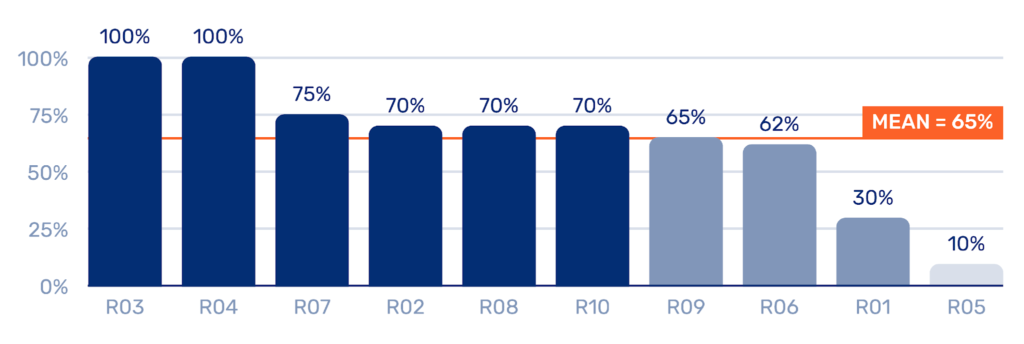
Hours saved tells the same story from another angle: the mean respondent estimates AI saves roughly 16 hours of a 40-hour week. Several were quick to push back on the framing — they don’t actually work fewer hours, they ship more in the same hours.
“From the client’s side I’m delivering 10x the value. From the employee’s side I’m still doing the same hours — I just code 10x faster.”
— R03, Data Engineer
Finding #2: AI significantly increases engineering output
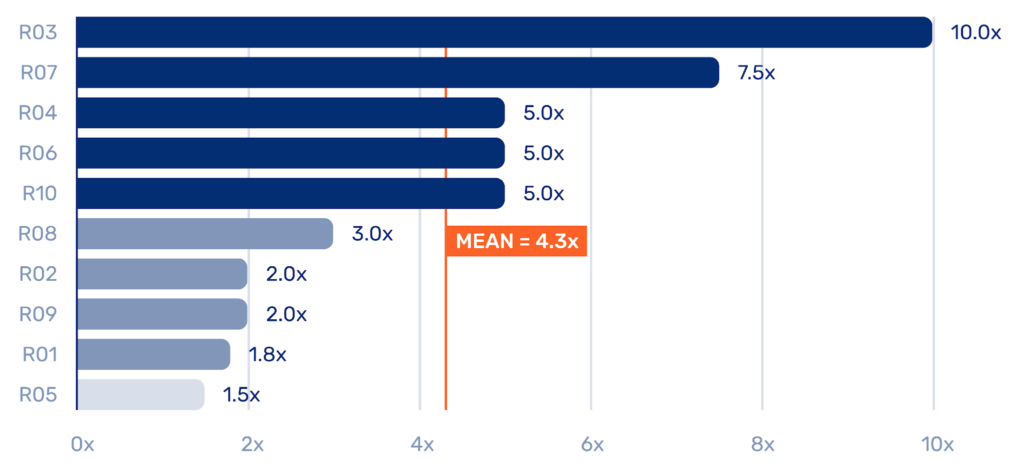
Asked how much AI had increased their output, the panel reported an average boost of 4.3x.
Gains vary by task
The 5x–10x cluster is dominated by data and DevOps practitioners doing SQL, pipeline scaffolding, Terraform refactors, and CI/CD work. The 1.5x–2x cluster is design and careful business-logic work like code refactors.
Senior engineers see bigger gains
The biggest gains came from senior engineers, who structure problems better, prompt more intentionally, and validate outputs more aggressively. Juniors saw smaller gains from the same tools.
“Productivity is up roughly 5x, sometimes more. A single developer can now do the work of three or four.”
— R07, Full-Stack Engineer
Finding #3: Quality is the contested variable
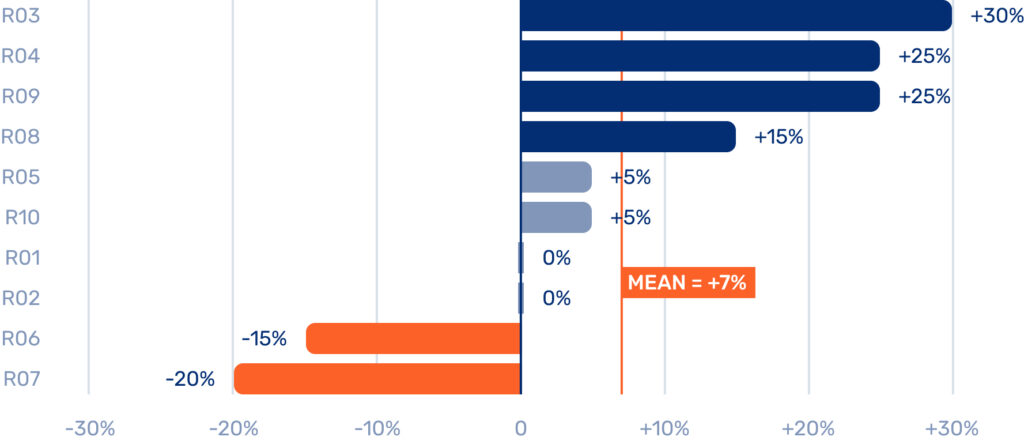
If there is one place the panel does not agree, it’s here. Five of ten say AI improved the quality of their deliverable. Three say it lowered quality by 15–20%. Two say it’s broadly unchanged. The split is not random.
Output improves on isolated tasks
Documentation, unit tests, scripts, APIs, and smaller refactors consistently improved with AI. Engineers said AI helps complete the repetitive or lower-priority work that often gets skipped or rushed under normal deadlines.
Quality drops on large repos
On large repositories, AI can lose context and generate code that looks correct but introduces subtle inconsistencies or mistakes. Engineers have to spend more time reviewing the output to catch what slipped through.
Finding #4: The toolchain has already converged
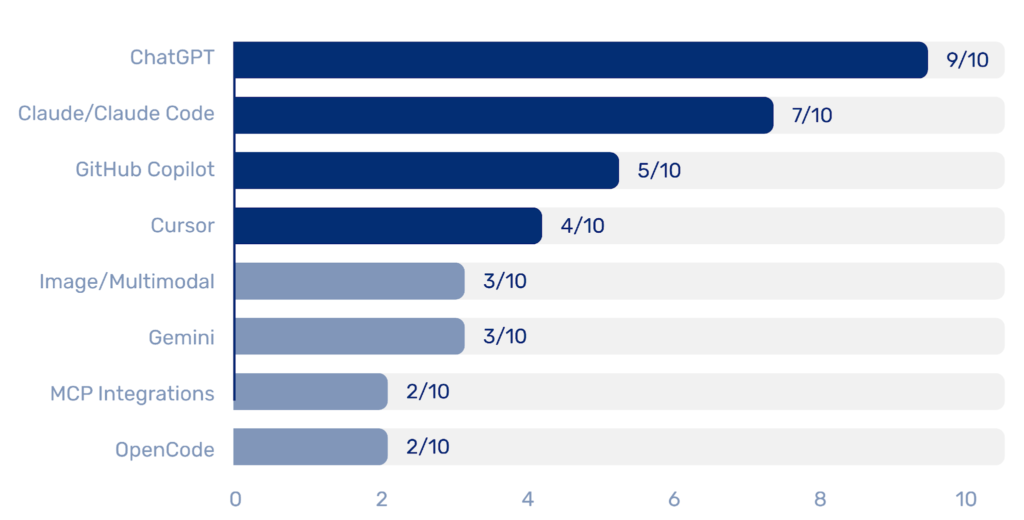
Two products dominate. ChatGPT is used by nine of ten respondents — mostly for research, drafting, and planning. Claude Code is used by seven of ten — mostly for code generation and agentic work. Beyond the two leaders, GitHub Copilot remains widely used in Microsoft-stack work, and Cursor and OpenCode are popular as IDE-integrated harnesses.
“I keep it simple. One tool, one context, no twenty-tab ecosystem. As we say in Argentina — ‘strong, straight down the middle.”
— R04, Infrastructure Engineer
The new reality of nearshore IT services
Taken together, the findings describe an IT services market that has changed faster than the contracts running on top of it. Three implications follow.
1. Smaller, more senior teams
Every respondent expects engineering teams to shrink. The marginal value of an additional junior has fallen sharply, while the marginal value of a senior who knows how to architect, prompt, and review has risen. Buyers should expect smaller team proposals; providers should resist the temptation to staff for headcount.
2. The junior talent gap is a growing problem
The gap between what a senior engineer with AI produces and what a junior produces has widened dramatically. The cost differential has not. From the buyer’s perspective the rational decision is to hire seniors and skip juniors — with the industry-wide consequence of a missing generation of mid-level talent five years from now.
3. Expertise is the new arbitrage
The original nearshore pitch was “similar quality at lower cost.” The 2026 pitch is “senior expertise in scarce specialty stacks at competitive cost.” The panel consistently converged around four areas where AI still cannot reliably deliver on its own and senior engineers make a real difference: cloud, security, data, and AI enablement.
AI creates output. Experience creates value.
Our research reflects the reality inside the nearshore teams supporting U.S. companies every day: AI is embedded in roughly two-thirds of the workday, productivity has more than quadrupled, and the market is starting to reward seniority and human judgment over raw coding output.
Finally, writing code is no longer the competitive advantage. AI can already generate large amounts of code quickly. The teams creating real value are the ones that know how to architect creative solutions, review AI-generated output, and make strong technical decisions based on experience.
Download the full AI whitepaper
This post covers the key findings from our research on how Latin American nearshore software teams are using AI in 2026. The full whitepaper goes deeper into the methodology, productivity data, team structure implications, and verbatim responses from engineers, designers, and DevOps practitioners working with U.S. clients.
Get the full report → Download the AI in Nearshore Software Teams 2026 Whitepaper