Making Nearshore Software Services Accessible to Everyone
Apple is redefining how technology feels for younger generations: more accessible, more relatable, and more human. At Ewents, we believe nearshore software services should evolve in the same direction. Through Wenty and the way we work, we’re building a more collaborative, approachable, and long-term way to create software together.
 Matías JacobMarch 9, 20264 min. read
For too long, the experience of hiring remote engineers has been too corporate and too transactional: long procurement cycles, rigid contracts, awkward time-zone gaps, and engineers who are seen as just “resources”.
Nowadays, technology itself is becoming more human. Hiring devs shouldn’t feel like a cold outsourcing agreement. It should feel like building something meaningful together, in a way that is fun and enjoyable. So, nearshore service providers have the opportunity to redefine the software development experience.
There’s no better example than looking at Apple, since they just announced Findy (a.k.a Lil’ Finder Guy).
It’s their new mascot, inspired by Apple’s Finder to promote the launch of the MacBook Neo, with the goal of making technology more affordable and accessible to everyone. Mascots create emotional shortcuts. They make tech less intimidating. They make brands shareable. You can turn them into plushies, stickers, emojis, filters, and avatars. They exist beyond the hardware itself.
Funny thing is… a few months ago, we launched our own mascot named Wenty. Our team understood earlier than the big companies like Apple that technology must be fun.
Here’s a side-by-side comparison of Apple’s Findy vs our mascot, Wenty.

Coincidence? Maybe. Validation? Absolutely. 😉
But this isn’t really about mascots. Apple is transforming its brand to make technology more accessible to everyone, especially younger people. Let’s explore more.
How Apple is quietly rewriting its brand.
Owning a MacBook once felt like joining a club. It was aspirational. Slightly exclusive. Expensive enough to signal status. Clean aluminum finishes. Dark gray. Silver. Soft lighting. Slow-motion product shots. Calm voices (Love your English accent, Jony Ive <3).
But launching expensive products and corporate brand positioning doesn’t automatically click with a 13-year-old who grew up on TikTok, Fortnite, YouTube Shorts, Roblox avatars, and massive Discord communities.
Apple understood something critical: brand loyalty now starts younger than ever.
The 8 to 21-year-old demographic is not “future customers.” They are current ecosystem users. They influence household purchases. They shape trends. They decide what is cool. And if you capture them early, you win decades of lifetime value.
So what does Apple do?
They soften. They shift tone
They push aggressively into TikTok and short-form platforms, with short-form reels of limes doing a FaceTime call. More character. Less corporate. More relatable.
And that matters because younger audiences adopt identities. Which leads to our next point:
Allowing everyone into the ecosystem.
Apple used to be expensive. Genuinely hard to access for many consumers.
In 2008, Steve Jobs said “We don’t know how to build a sub-$500 computer that is not a piece of junk." The newly announced Macbook Neo is 25% cheaper than that when adjusted by inflation. You can get one for $499 with education pricing and student discounts.
Even more interesting, you can now realistically build an almost full Apple ecosystem — MacBook, iPhone, AirPods, iPad, Apple Watch — for under $2,000 total.
Apple aggressively lowered production costs by vertically integrating its chip manufacturing. When they moved from Intel processors to their own silicon, starting with the M1 chip. They fundamentally changed their cost structure.
As a result, the Neo becomes the gateway drug.
It’s the “first Mac.”
What a genius strategy, because once someone enters the ecosystem early, they rarely leave.
Have you wondered what happens after the first purchase? When Apple lowers the barrier to entry with a more affordable device like the MacBook Neo, they’re not just selling a laptop; they’re onboarding a lifetime user. Once someone is inside the ecosystem, everything else starts to make sense. The iPhone syncs effortlessly. AirPods connect instantly. iCloud stores everything. The Apple Watch complements it all. Over time, that user becomes a brand ambassador and wants to stay with the company long term.
At Ewents, we don’t want to be a one-project vendor. We want companies to start with a nearshore team, experience cultural alignment, quality, and the time zone advantage, and then grow with us. Add more engineers. Expand into QA, cloud, DevOps. Scale together. Just like Apple builds ecosystems, we build long-term partnerships. And that changes everything, including how software is built.
When hardware gets cheaper, software must follow.
While hardware costs are dropping, many companies are still operating with outdated assumptions about software development costs.
Some businesses still think building great software requires hiring engineers at $400k–$500k per year in Silicon Valley. That model is becoming inefficient. And AI is making it even harder to justify hiring software engineers locally in the USA.
The nearshore model of hiring engineers in Latin America keeps on becoming more and more convenient over time, with dev talent working in US timezone for a fraction of the cost.
That’s exactly why we built Ewents the way we did. We’re not competing on “cheap.”
We’re competing on intelligent allocation of resources.
If Apple can manufacture its own chips to reduce costs and increase performance, companies should also rethink how they structure software teams.
Wenty reflects friendly nearshore software services.
Let’s go back to our mascot, Wenty.

When we created Wenty, it wasn’t just about having a cute character.
It was about rebranding what software services feel like.
The term “offshoring” carries baggage. It feels transactional. Distant. Sometimes rigid. Sometimes frustrating.
That’s not what nearshoring should be like. Especially when working with Ewents.
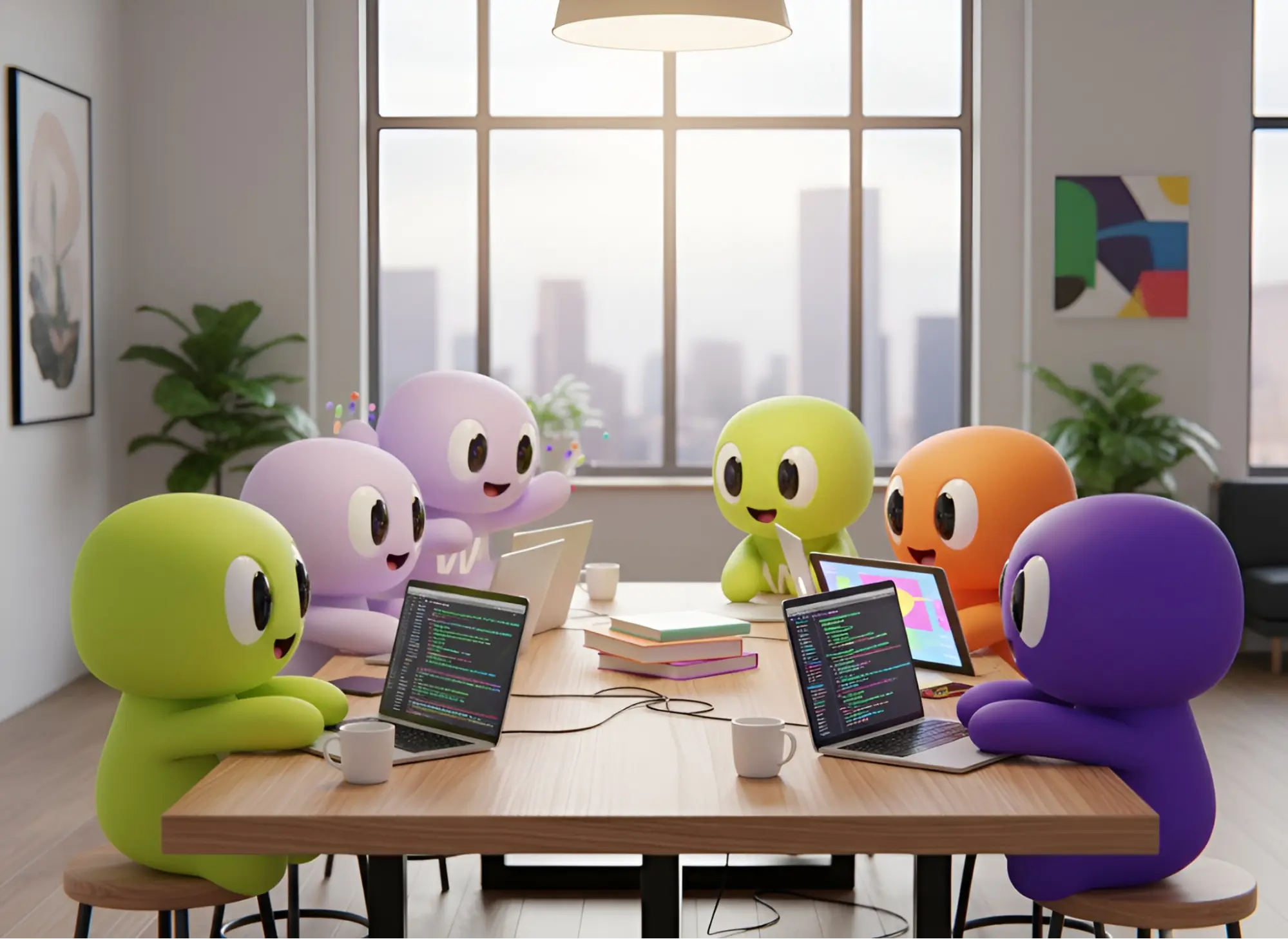
We’re relationship-driven. Collaborative. Warm. We build long-term partnerships. So we created Wenty sharing asado. Wenty drinking mate. Wenties collaborating. Wenties coding. Wenties celebrating milestones.
Because culture matters. People don’t want to work with faceless vendors. They want to work with teams they like.

When Apple introduces Findy, it confirms something important: even the most premium, disciplined tech company in the world understands that they need to be approachable.
We love it. It means the market is shifting exactly where we bet it would. So let’s take it to a vote.
Wenty or Findy?
Let us know 😊